
English| EUR
Suggested for you
More currencies
Choose a language
Two very different reefs sit within one morning of each other on Bali's north-west coast: the restored shallows of Pemuteran Bay and the steep walls of Menjangan Island. This snorkeling pemuteran menjangan guide sets out how the two connect, what the national park controls, and when the water is actually worth the crossing. Every figure quoted here follows the park's published hours and conservation entry rules.
Quick answer
Snorkeling Pemuteran Menjangan means a boat transfer from Pemuteran village into West Bali National Park, which is open 07:00–18:00 every day of the week. Aim to be on the water inside the 07:00–11:00 window, when visibility is best. Conservation entry runs 200,000 IDR per person on weekdays, and higher at weekends and on holidays. Afternoon wind, not closing time, sets the real limit.
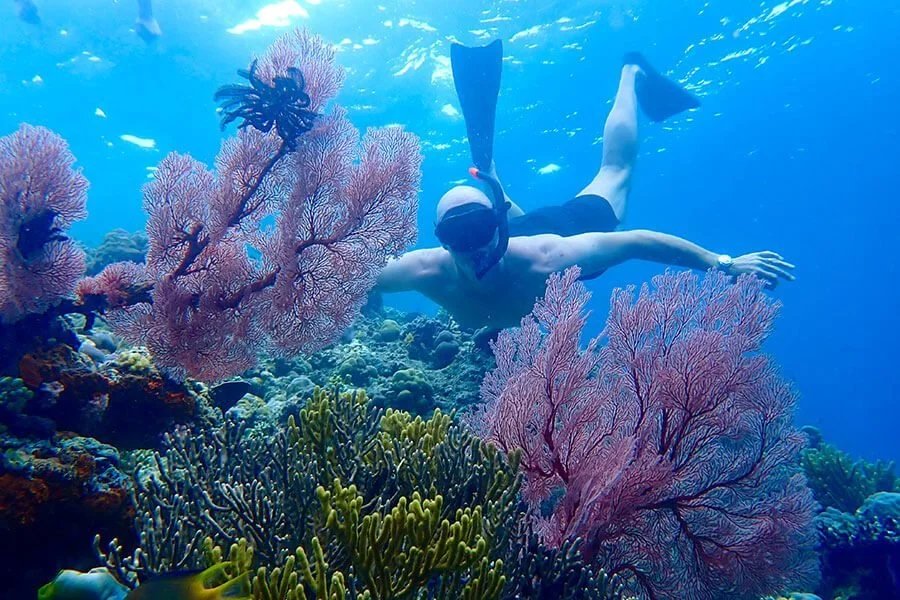
Menjangan means deer, and the name is literal. Javan rusa swim the shallow strait from the Bali mainland to graze on the island's scrub, then swim back. Nobody lives there. The only permanent structures are a small jetty system and Pura Segara Giri Dharma Kencana, the clifftop temple reached by a stairway above the landing. Everything around it — the island, the strait, the mangrove shore opposite — sits inside West Bali National Park. That protected status is the reason snorkeling pemuteran menjangan works the way it does: access is regulated, boat numbers are counted, and the reef has been left largely intact. Pemuteran itself is the other half of the story. The bay faces north into the Bali Sea and stays unusually flat, which is why the village became a base for reef work rather than resort development. Its Biorock installation, started in 2000, grew into one of the largest coral restoration projects anywhere, with electrified steel frames seeded with fragments that now carry fish life of their own. Snorkellers can read the difference in a single day. The Pemuteran house reefs are gentle, shallow and restored; a Menjangan Island snorkeling tour trades that for a fringing reef that ends in a wall, dropping steeply into blue water at sites such as Coral Garden, Eel Garden and Pos 2. Indonesian listings often call the crossing snorkeling Pulau Menjangan, and the two reefs are usually treated as one day on the water. The practical consequence is that timing matters more than gear. Wind builds across the strait through the middle of the day, and chop on the surface scatters light before it reaches the coral. Mornings are clearer, calmer and quieter. Most North Bali reef trips are built around that fact. Boats leave from Pemuteran beach and from the national park jetty at Labuhan Lalang, and both routes end at the same two landing posts on the island's south side. Visibility at the wall is often measured in tens of metres; closer in, the reef flat holds parrotfish, bannerfish and the occasional blacktip reef shark. Currents along the drop-off are usually mild but not absent, and the sheltered side shifts with the season. Reading the day before entering the water is the single habit that separates a good trip from a frustrating one, which is why experienced crews plan snorkeling pemuteran menjangan around the first hours of light rather than a fixed itinerary.
“Timing matters more than gear: mornings on the strait are clearer, calmer and quieter.”
The best arrival window for snorkeling Menjangan Island is 07:00–11:00. This early timeframe minimizes exposure to afternoon winds and provides optimal underwater visibility for observing marine life.
27°C–29°C. Lower humidity and clear skies.
This period offers the most consistent conditions for snorkeling excursions.
28°C–31°C. Higher humidity with occasional rain.
Expect periodic showers, though morning snorkeling is often unaffected.
—
Early arrival ensures calmer water surface and quieter reef conditions.
Verdict: For the best experience, plan your visit during the dry season between April and October, aiming for an arrival time between 07:00 and 11:00.
Menjangan Island remains open for snorkeling activities daily throughout the week. The park operates consistently within the specified hours to accommodate visitors.
Access to Menjangan Island requires a conservation fee payable for entry into the West Bali National Park. These fees are determined based on the day of the week the visit occurs.
Verdict: A typical adult pays 200,000 IDR on weekdays or 300,000 IDR on weekends and holidays for the conservation fee.
Menjangan Island is located within West Bali National Park, accessible exclusively via boat from mainland ports in North Bali. Most travelers depart from Labuan Lalang jetty, which serves as the primary gateway for authorized water transport to the island.
Drive to Labuan Lalang port via Jalan Raya Gilimanuk-Singaraja
Boat transfer from Labuan Lalang jetty to Menjangan Island
To ensure optimal water conditions, plan your arrival at the port between 07:00–11:00. This window avoids afternoon winds and provides the best underwater visibility.
Menjangan sits inside West Bali National Park, so a little paperwork and gear sorting weeks ahead keeps the trip simple.
Menjangan Island sits inside West Bali National Park, so every snorkeler is a guest in a protected marine reserve. The reef wall here is live coral, and the conduct rules exist to keep it that way.
Everything you need to know about snorkeling pemuteran menjangan
The best arrival window is 07:00–11:00 to avoid afternoon winds and ensure optimal underwater visibility. This early start allows you to experience the coral gardens in calm conditions.
The conservation fee is 200,000 IDR per person on weekdays, increasing to 300,000 IDR on weekends and holidays. Please ensure you have local currency prepared for these payments at the national park office.
The park is open daily from 07:00 to 18:00. This schedule remains consistent throughout the week, including weekends and public holidays.
Yes, local operators offer guided excursions to the coral reefs in West Bali National Park. These tours typically provide necessary gear like masks, snorkels, and fins for exploring the marine biodiversity.
The calm, shallow waters around the island are generally suitable for families, provided participants can swim. Always monitor sea conditions and follow safety guidelines provided by your boat captain or guide.
Pack sun protection such as reef-safe sunscreen, a hat, and light clothing to protect against the tropical sun. It is also recommended to bring a dry bag for personal items and plenty of water for hydration.
Access is via boat from nearby coastal points such as Labuhan Lalang or Banyuwedang. You can arrange boat transport through various local services located in the Pemuteran and Labuhan Lalang areas.